
For the hooligan amongst us, we offer the bits and bobs to enable you to stuff a 2-stroke big block 61-105 under the hood to create a genuine pocket rocket. It's our part number AUD1550, aka a big block conversion (BBC).
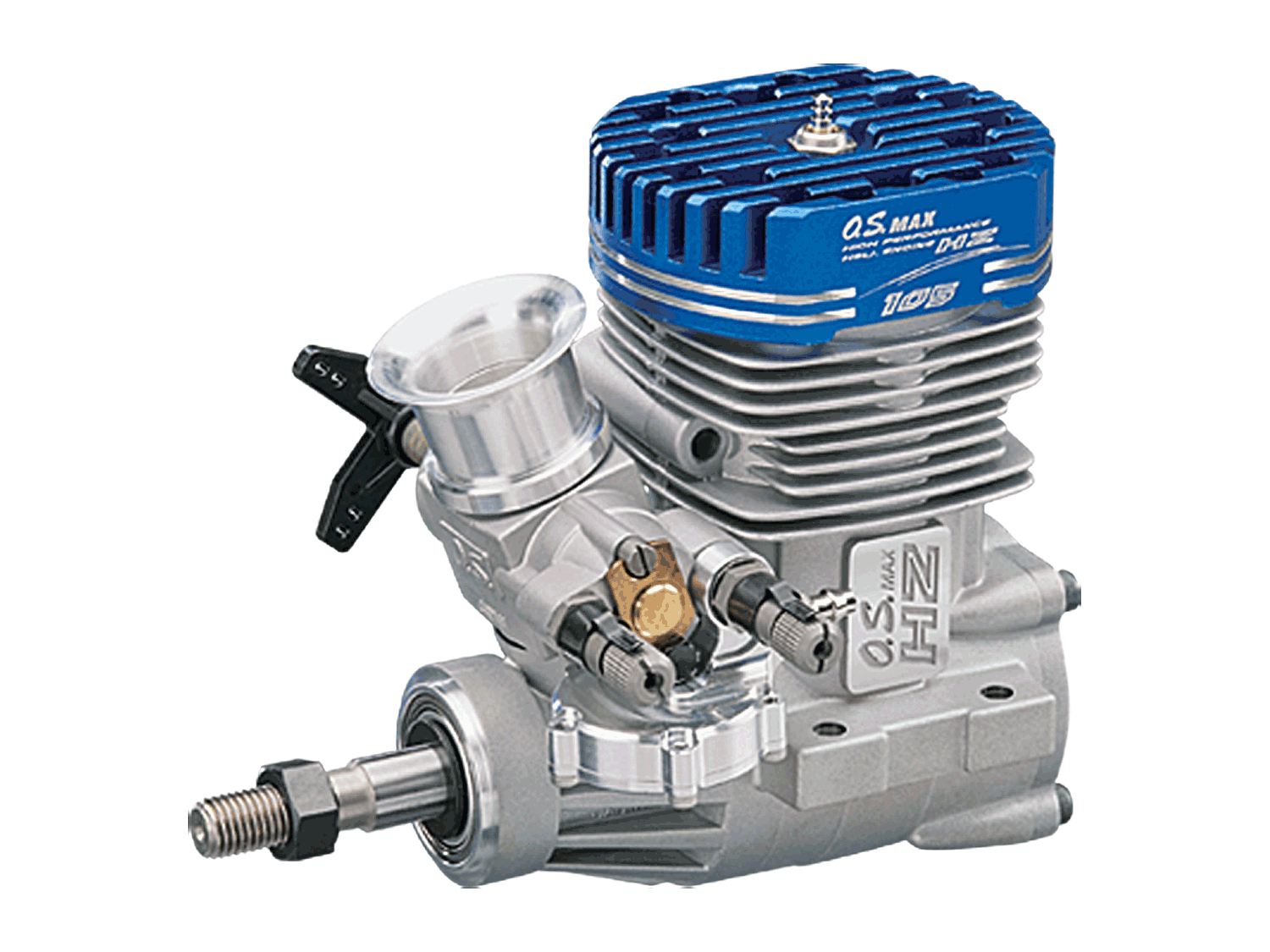

Best part is, just as when the 55 came out and suddenly the 50SX Hyper wasn't good enough for some pilots, the OS61/70/91 engines are similarly available dirt cheap. And it's all because so many folks upgraded when each successive engine hit the market.
Anyway, if you keep to yourself what's under the hood (the term is sleeper), then a hot BBC will smoke anybody else's 600 equipped with the latest and greatest 55 in a climb out or drag race (even if you're just an average pilot). And by way of warning, spontaneously shouting . . . Yeehaw! . . . is actually perfectly normal.
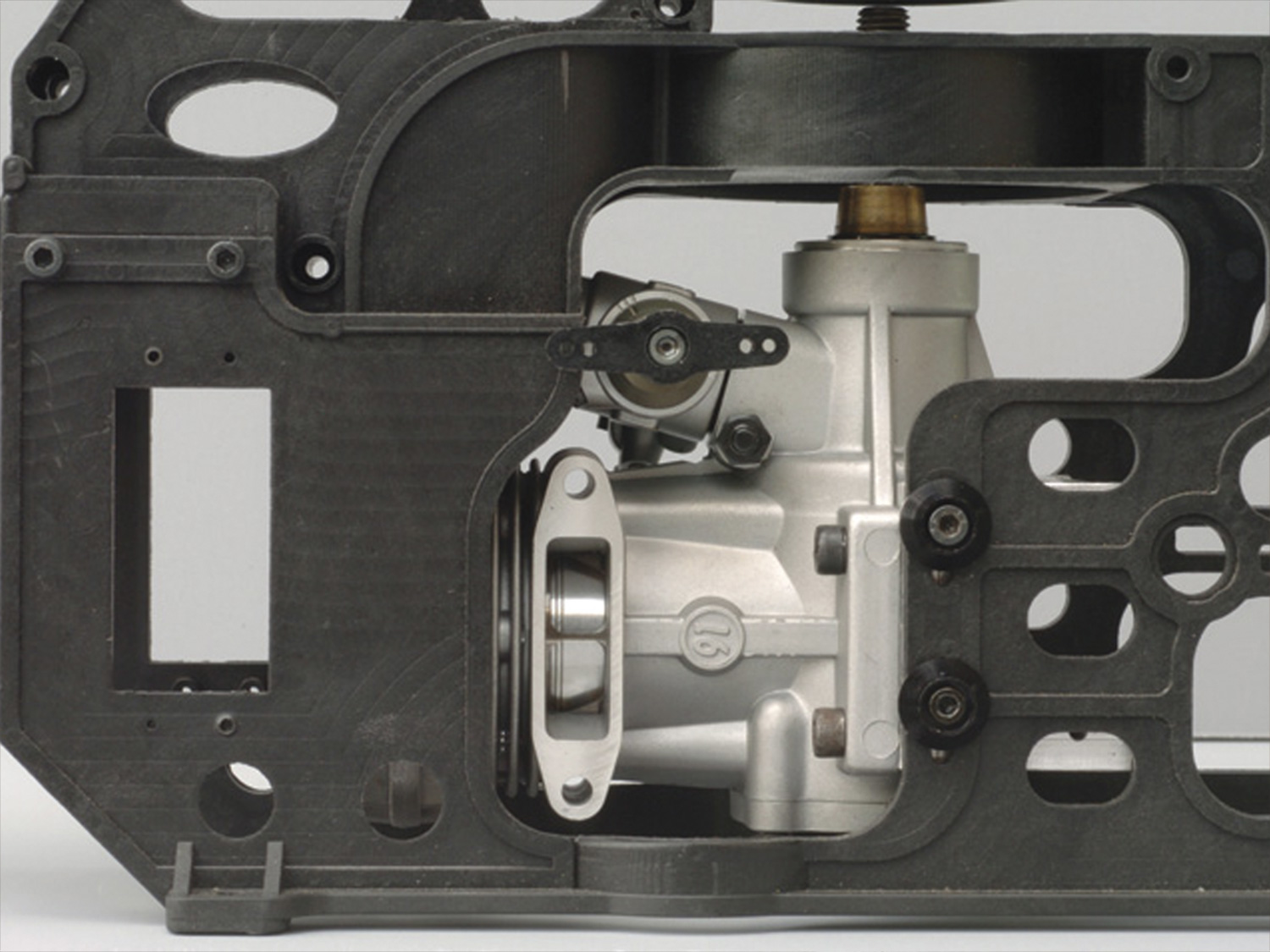
So if in the above photo this big block engine looks as if it were born there, it's because it's not an afterthought, we had it in mind from the get-go. Only thing is, depending on which engine you select, you'll need more blade load.
But before we go there, let's first share some part numbers, and touch on gear ratios because these two (both blade loading and gear ratios) are interrelated with engine size.
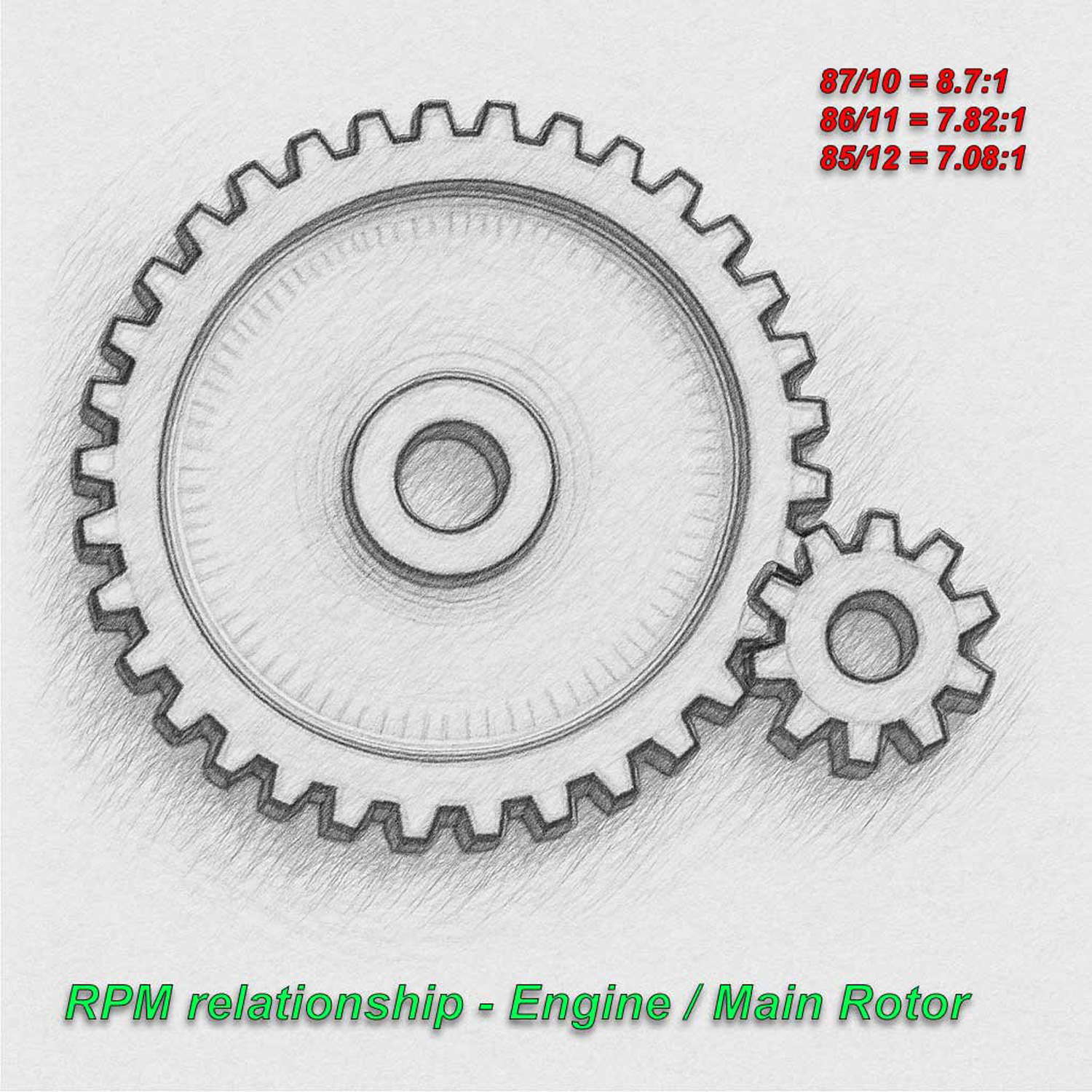
Gear ratio: 87/10=8.7:1 (stock)
Gear ratio: 85/12=7.08
1) Thunder Tiger Raptor 50 - 85 tooth main gear - part #AK0148
1) Thunder Tiger Raptor 60/90 - 12 tooth pinion - part #TTRPV0193
Gear ratio - 86/11=7.82
1) Thunder Tiger Raptor 60/90 - 86T main gear - part #PV0298
1) Thunder Tiger Raptor 60/90 - 11 tooth pinion - part #TTTPV0192
More on gear ratios - 1 Module
So the astute amongst you may have noticed if you add up the tooth count of pinion and spur gears in the P6 they total 97 (87T plus 10T). Same thing with either the 7.08:1 or 7.82:1 ratios (86T plus 11T or 85T and 12T). Reason for this is they're all 1MOD gears (or 1 Module), which refers to the pitch (3.14mm).
Anyway, it's worth knowing this regarding 1MOD gears; if the sum of the pinion and spur gears remains the same, the center-to-center spacing between shafts is constant. Handy!
Stock 8.7:1 gear ratio
The purpose of sharing those Thunder Tiger part numbers is for 'just in case' you wish to fool around with gear ratios. The stock gear ratio is 8.7:1. And we know this because if we take 87 (the number of teeth on the main gear) and divide by the number of teeth on the pinion gear, which is 10 then with basic math, we divide 87÷10=8.7 and as you remember from school, ratios are expressed against the number 1, so this is written as 8.7:1.
And what this is doing is showing the relationship for how one revolution of the main rotor head requires 8.7 revolutions of the engine, capisce?
Now let's make practical use of this information; both the OS 55HZ-H and -R version are rated at 2.1hp at 17,000RPM. However, a further bit of reading with the engine manual reveals the practical RPM is actually 2000-20,000RPM.
So if we first take 17,000 and divide by 8.7 we get the rotor head speed relationship to main rotor head speed at max horsepower (17,000÷8.7=1954 or call it 1950). Point being, if you want to run a 2000RPM head speed, then 8.7:1 is plenty close enough to the perfect gear ratio for both the -H and -R engines because it optimizes their horsepower.
Collective management
However, since the practical RPM is up to 20,000RPM, then using the same math, this works out to 20,000÷8.7=2298 (2300RPM to keep the numbers easy). Thing is, in the real world, these engines don't have the stones to turn the main rotor at 2300RPM (but they will both be happy enough turning it at 2200RPM . . . thus explaining why some top 3D pilots fly at 2200RPM).
Problem comes in because they're easier to bog at 2200 than at 2000 because they're down on torque when operating above peak horsepower. Enter superior collective management skills (and why I bring this up becomes clear in a little bit).
So why does this matter? Simple, the faster the main rotor is turning the more quickly the machine will respond to cyclic throw. 3D oriented pilots like this - but - if your collective management skills are less than stellar, then you would be wise to stick to 2000RPM vs 2200RPM (don't shoot the messenger).
Major point being, because the engine is at WO (wide open throttle, so it's giving you all its got), then the RPM are regulated with main rotor blade pitch (to adjust the load) and you, meaning how long you hold the pitch. Difference between you, me, and the best pilots is they can more finely 'feel' the load.

Like if you watch how top pilots use this kind of RPM, they take sharp brief stabs at collective, make the model jump, then immediately ease off the collective pitch to allow RPM to build back up. This, to stop from overloading the engine. And it's this skill, which is generally termed collective management.
And let me tell you, you won't get really good at it for years (maybe never) no matter how much sim time you accumulate. Bottom line? It takes practice, which a simulator (no matter how faithful to the model) just can't give you. Then again, if 3D were easy, everybody would be good at it.
So now let's talk about big block engines since it's the very purpose of this section. And there's a reason for loving big block engines, and not actually to do with having more horsepower, but with having more torque. Important because torque is actually what makes things move.
Big Block engines
So now let's do the same math, again. For example, the OS MAX 61SX-H WC makes the same 2.1HP as the 55HZ but also makes more torque. The added torque means you get more collective pop at the same head speed as the .55 without bogging. And the 70SZ-H make 2.5HP vs 2.1HP and has even more torque than the WC, which makes it mo' betta for 3D. And the fun's not limited just to 3D because sport pilots will have a blast making use of 15° of collective and racing bottle rockets!
Recapping; the fundamental reason why either the 61WC or the 70SZ is more interesting than a 55 is both have oodles more torque than any small block ever made. And while newbies brag about horsepower, torque is what makes things happen, and torque comes form displacement, or as experienced hot rodders say . . . there's no replacement for displacement!
Lerch conversion
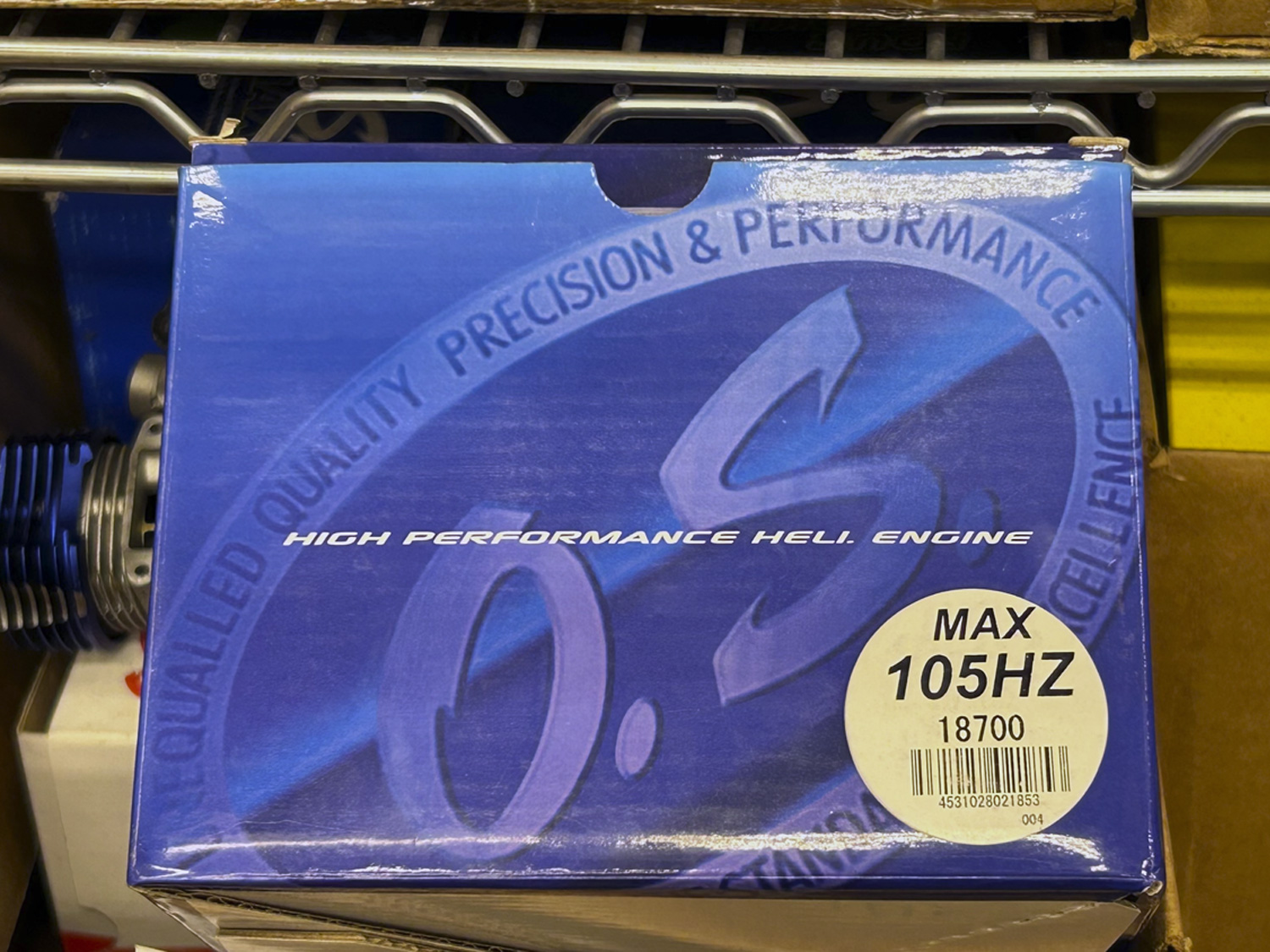
So what makes the 91 and 105 more special than a 61 or 70? In a word, torque. They make a ton more torque than either of those big block engines. However, their optimum RPM range is lower and to get the blade speed where we want it for 3D, then we need to look into different gear ratios to make better use of where the engines are happiest operating.
Note; the 61SX-H WC and 70SZ-H are happy as a clam in deep mud on the stock P6 gear ratio of 8.7:1, but the 91 and 105 would like taller gears
And for taller gears within the P6 we have an ingenious fellow in nearby Tampa, name of James Lerch, to thank because he's the guy who realized using available Thunder Tiger parts made for an easy gear ratio change in our product. Anyway, we took to calling this a Lerch conversion and the moniker stuck!
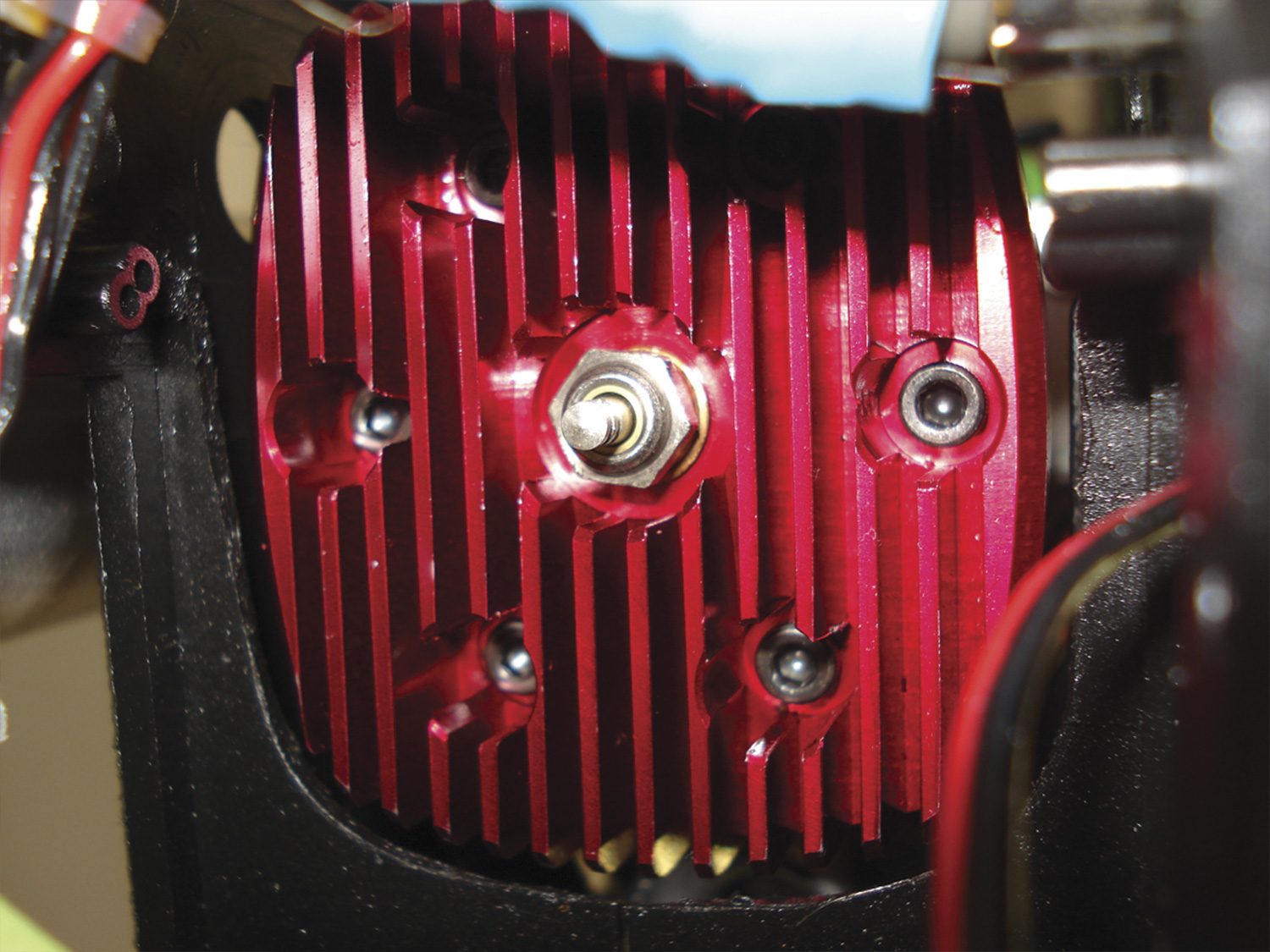
Nice thing about a Lerch conversion using the gears we noted above (the Thunder Tiger part numbers), is you have two additional gear ratios available to you beyond 8.7:1 to include 7.82:1 and 7.08:1.
Watch this brief video to learn how easy this actually is to do - you don't need a lathe! Then go parts scrounging!

7.82:1 and 7.08:1 gear ratios
So let's put numbers to these. At 18,000RPM (max practical for the 91SZ) with 7.82:1 gears, we're talking 2300RPM again. But unlike a small block that won't really pull 2300RPM, a big block will . . . and rather easily. Sound interesting?
Anyway, the 91SZ is a HELL of a lot harder to bog than a small block, which makes it great for learning to improve collective management skills. So where does the 7.08:1 gear ratio come into play? Now we're going to look at differences between the 91SZ and 105HZ, both.
Note; these engines make 3.3HP and 3.65hp respectively (smoking any small block in existence), but while the 91SZ is happy to 18,000RPM, the 105HZ runs out of steam at 16,500RPM (unless you're a tuner and know how to breathe on it by raising ports, and such).
Anyway, once again a bit of grade school math reveals using the 7.82 gears isn't what you want for the 105HZ engine because at 16,500 it works out to 2100RM, and for 3D work you want more (of course, for sport you don't care).
However, when you run the numbers for the 7.08:1 gear ratio, then 16,500÷7.08=2330RPM. And believe me, for 3D winding the main rotor to a touch over 2300RPM and having the nads to handle it is a big deal.
Bottom line? All the big block engines have waaaaay more torque than a small block so you get a SERIOUS improvement in collective pop beginning with the 61SX, it gets better with the 70SZ, and while the 91SZ is sweeeeet, there's nothing quite like a 600-class P6 equipped with the 105HZ on this planet!
So circling back around, this brings us to blade loading (the other part of the combo that goes with gear ratio).
Blade loading and why it matters
You see, with either 91 or 105, a set of 600mm blades won't cut it (not even close). Heck, even 620mm blades may not be enough for you. And while 620mm versus 600mm means a lot more thrust (remember it's principally the outer bit of the blade that develops the bulk of the thrust), we know from experience 620mm blades are barely enough for a 91 but not really enough for a 105. At least not when we're talking about enough grunt to affect Earth's rotation!
So this brings us to another area of discussion when harnessing this much power in a 600-class air frame, multi-blade rotor heads, our part number AUD1024 for the Quattro rotor head.

Note; if the red, white, and blue flag motif of this canopy appeals, here's a link to our America painted fiberglass canopy.
Wrap up
So if you're interested in stuffing a big block under the hood of your P6, we have the bits and bobs to help with using an OS MAX 61SX-H WC or 70SZ-H, and if you have a hankering for a 91SX-H or 105HZ, then you'll need to scrounge for some Thunder Tiger parts, and perform a Lerch conversion to optimize gear ratios. And you're going to use 620mm blades with the former sets and look hard at a Quattro head for the latter pair of engines.
Last thing; we have two more types of big block engines to discuss. So we've penned articles for engines that strictly speaking also met the BBC definition, 4-stroke and gasoline engines! Poke around, they're within the Propulsion archive.


