

Whether what floats your boat about the Quattro main rotor head is just how it looks, or you actually need the greater loads it’s capable of imposing doesn’t matter. The goal is the same . . . to please you.
Introduction
To the question . . . how do you go about absorbing greater amounts of horsepower in a helicopter? Well, one way involves fitting ever longer blades. For example, 620mm blades impose greater loads on the engine than 600mm blades.
However, the ability to accept ever longer blades is limited by the length of the tail boom. E.g. at what point is there a risk of interference between main rotor blades and tail rotor blades?
A Pantera P6 accepts blades up to 620mm long. That's rather a lot in a world where many machines are marketed to 3D mavens. This is because in the realm of 3D, the preferred engine is the 55HZ-H and it's just capable of turning 580mm main rotor blades at the desired RPM for optimal 3D performance (in the range of 2300RPM). So there is a purpose in the ability to accept 620mm blades. What is it?
It's that we envisioned from the very beginning the desire of some to shoehorn a big block engine into the airframe. And under those circumstances, the 620mm main rotor blade is just about perfect because of the added grunt of the larger displacement big block engines. A big block 'will' turn 620mm blades to 2300RPM whereas the 55 just won't!


The stock boom is long enough to permit fitting 620mm blades. And not so you could use them with small block engine like the 55HZ-R, which for sport is happy enough with 600mm (but which for 3D prefers 580mm blades) and which, would choke on 620mm blades. Instead, it's because 620mm is the perfect load for both the 61SX-H or 70SZ-H engines.
So a 620mm blade capability was by intent. It also neatly explains the relatively high speed tail rotor gear as longer booms and greater loads require more thrust to achieve the angular change desired in pirouetting turns.
However for a 91SX or 105HZ (which didn't exist when we froze the design parameters of what became the Pantera), then we need another approach for those monsters because 620mm main rotor blades just isn't quite enough load.
Instead, we turned to the technique favored in the world of full scale (think Hughes H500). Yup, we fitted more rotor blades! Four of them in fact.
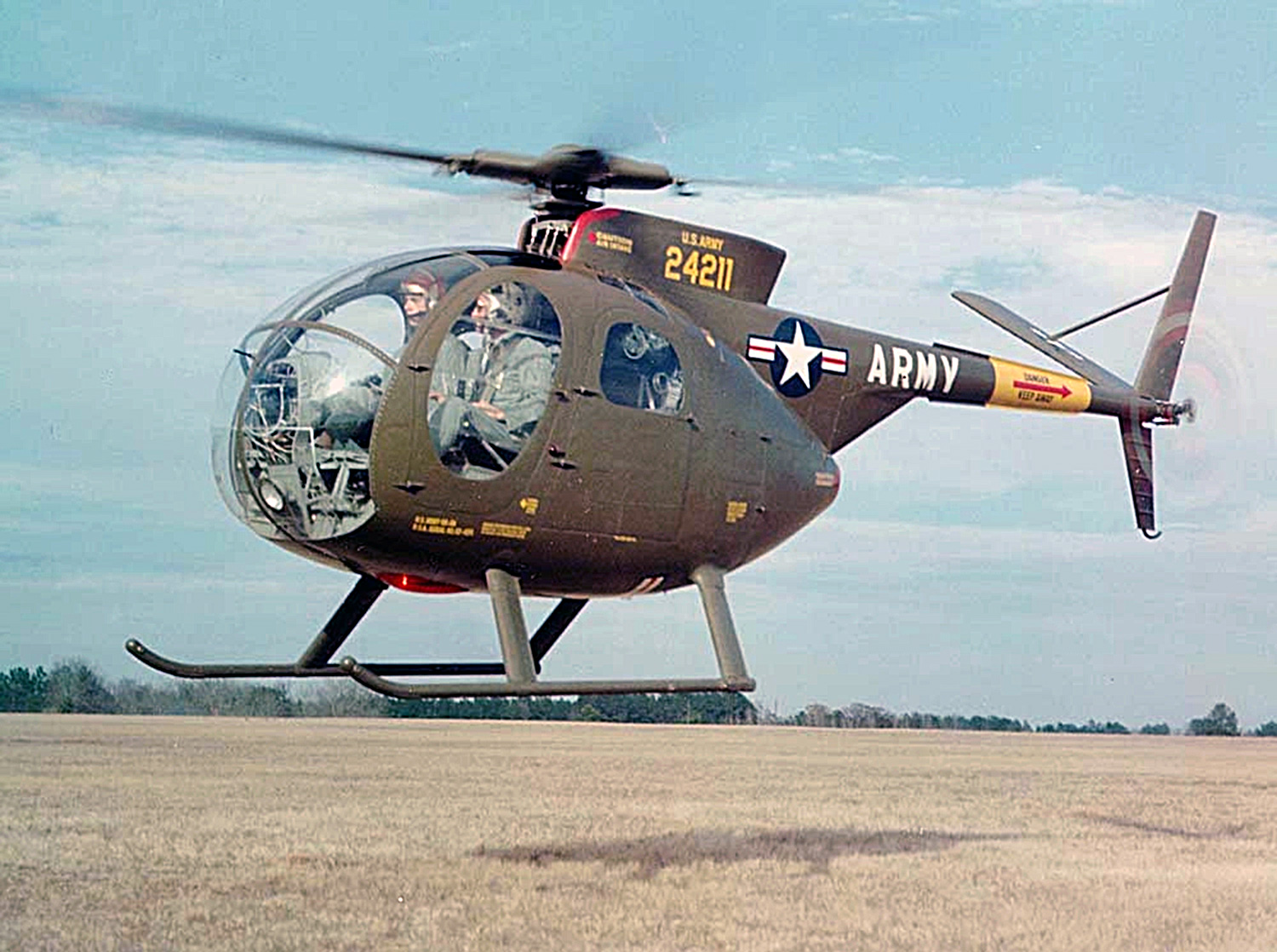
Our 4-blade Quattro main rotor head has the same design approach as the Hughes 500. In attempt to absorb more horsepower within the limits of an airframe designed for main rotor blades not exceeding 620mm in length, we turned to Steve Poretz of
A bona fide mechanical genius, his Quattro main rotor design mimics the 1:1 approach of more blades equals more load, equals more lift, equals mo' betta! And it's our solution of ensuring a practical way of putting excessive torque to good use in a Pantera P6 for a better conversion of horsepower into raw thrust!
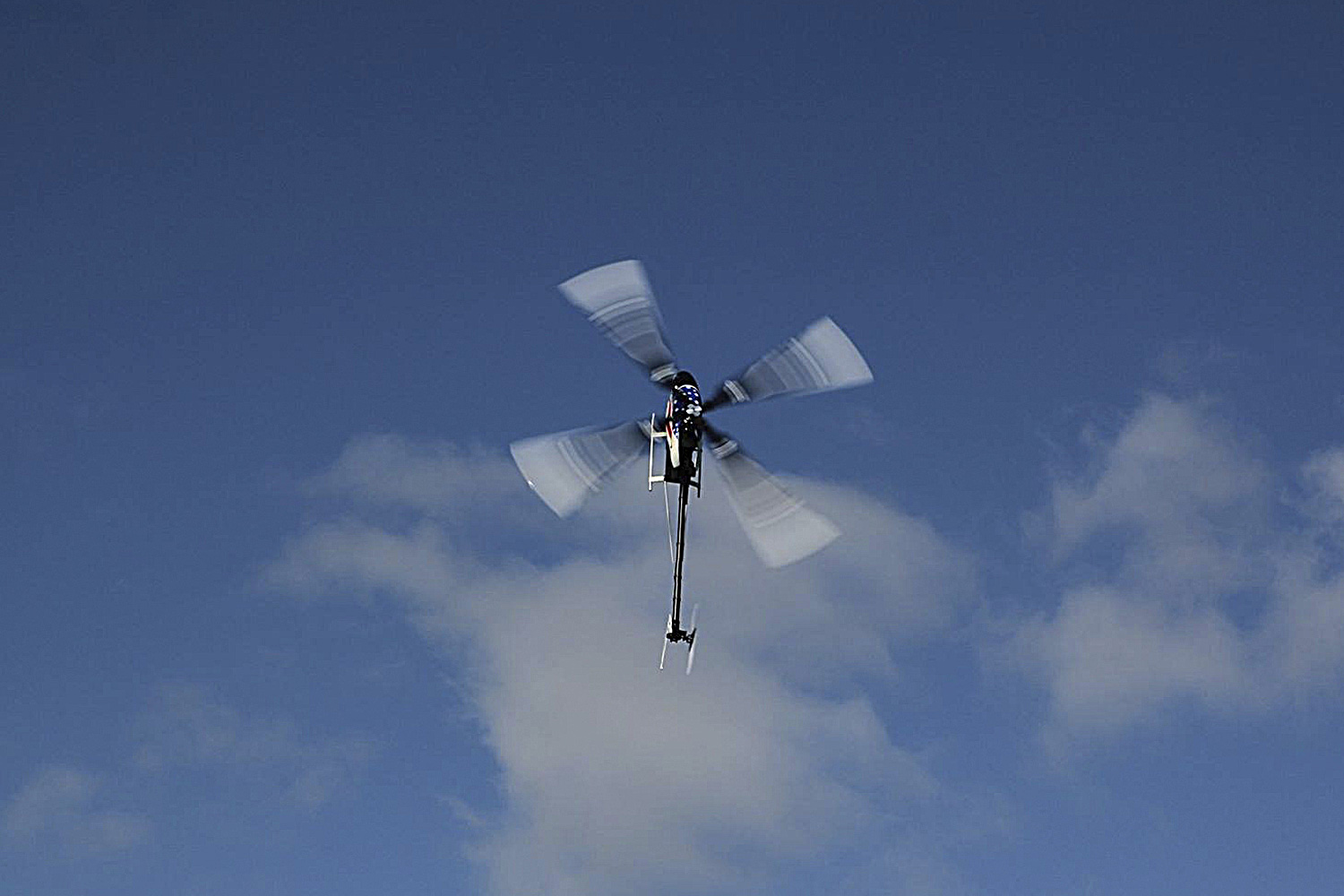
Note; for a 91SZ, you'll probably want to use four 600mm rotor blades, but for the 105HZ, because they make more torque, then you'll probably select four 620mm, instead.
Mix and match
Now let me clue you in on an interesting detail; you can use both at the same time. By this meaning; let's say you equip the head with two sets of 620mm rotor blades (two pairs, the four blades don't need to match each other, just the pairs need to match) and discover the engine wouldn’t 'quite' pull the load.
Well, a little know fact is you can run a set of 620mm 'and' a set of 600mm – yes, at the same time – as a way of fine tuning the blade load. The only caveat is they should be the same brand and same profile, otherwise, have at it as a way to play around when adjusting loads. Believe me, this works!
What's more, a model with a 55 isn't left out of the fun either because equipped with four 550mm blades, it’ll pull like you wouldn't believe! And straight up, flying a model with a Quattro main rotor head is a total blast in a shits-and-giggles kind of way.
Anyway, are you curious how things are made? This brief video shows how we make them!


